
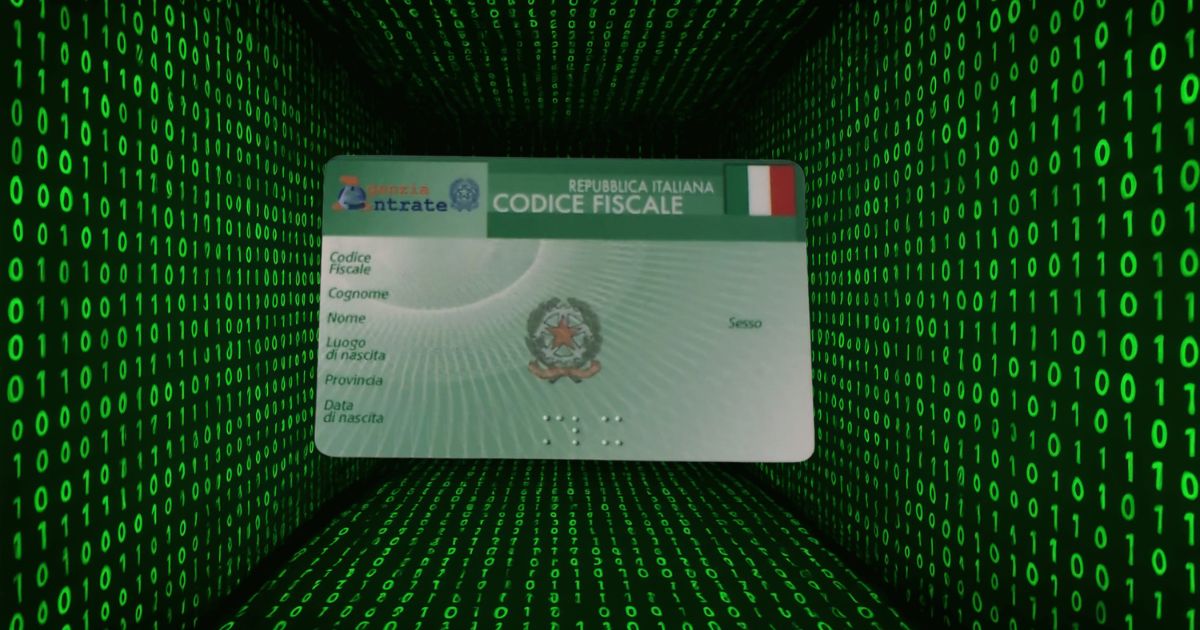
The Italian Codice Fiscale: A Key Step Before Buying Property in Sardinia
A Clear Guide for Foreign Buyers in Sardinia
Buying property in Italy — and particularly in Sardinia — always begins with an essential administrative step: obtaining the codice fiscale.
This personal identification number is often mentioned early in discussions with notaries or banks, yet it is rarely explained clearly to foreign buyers.
In practice, the codice fiscale is far more than a simple formality.
It represents the entry point into the Italian legal and tax system, without which no concrete administrative or legal process can truly move forward.
Faced with fragmented information, misconceptions about “online” procedures, and administrative practices that may vary depending on the interlocutor, it is easy to feel uncertain.
This article is therefore designed as a practical vademecum.
A structured guide to be read step by step, explaining:
- what the codice fiscale really is,
- who can obtain it,
- through which official channels,
- and above all how to proceed in practice when you are a foreign non-resident.
The objective is not merely to inform, but to provide clarity and security.
Because in Italy, a well-understood and well-anticipated administrative step is always the foundation of a smooth and respectful property transaction.
What is the codice fiscale?
The codice fiscale is a personal tax identification number issued by the Italian State.
It is unique, permanent, and directly linked to an individual’s civil identity.
It is required in order to:
- sign a preliminary contract or a notarial deed,
- open a bank account in Italy,
- register utility contracts (water, electricity, gas),
- carry out any significant tax or property-related transaction.
Without a codice fiscale, no property purchase can be legally completed in Italy.
Can foreigners obtain a codice fiscale?
Yes.
Any foreign individual may obtain a codice fiscale, even if they:
- do not reside in Italy,
- live abroad,
- do not hold an Italian visa.
It is not necessary:
- to already own property,
- to have identified a specific asset,
- to be physically present in Italy.
Can the codice fiscale be obtained “online”?
Precision is essential here.
❌ There is no fully automated online procedure allowing a codice fiscale to be obtained through a digital portal.
✔️ However, the request may be handled remotely or through representation, under specific conditions.
Italy remains attached to a territorial and human-centered approach to tax administration.
Official ways to obtain a codice fiscale
1. Appointing a representative in Italy
(The most secure and legally unquestionable method)
The applicant:
- completes and signs the official AA4/8 form,
- issues a written delegation.
A trusted representative:
- physically attends the Agenzia delle Entrate (Italian tax authority),
- submits the request to the competent office.
This method is official, stable, and universally recognised by notaries, banks and public administrations.
2. Remote request to the Agenzia delle Entrate
(Accepted on a case-by-case basis)
In some cases, the Italian tax authorities may accept:
- the AA4/8 form,
- and identity documents,
submitted by email.
⚠️ This possibility:
- depends on the territorial office,
- is not uniform,
- does not constitute a standard online procedure.
👉 It should therefore be approached with caution and anticipation.
3. Request via the Italian consulate
(Official procedure, often slower)
The request may also be submitted through the Italian consulate in the applicant’s country of residence.
This route is legally sound, but:
- processing times are often longer,
- procedures vary by country,
- an appointment may be required.
Required documents
Regardless of the chosen method, the following documents are required:
- a valid passport,
- the AA4/8 form, duly completed and signed,
- proof of foreign residence,
- where applicable, a written delegation.
Any inconsistency may result in delays or refusal.
Why this step should be anticipated
The codice fiscale is often required:
- at the very early stages of a property project,
- sometimes even before making an offer.
Delays in obtaining it may:
- block a signature,
- postpone a notarial deed,
- disrupt the entire acquisition timeline.
In Italy, administrative anticipation is perceived as a sign of seriousness and respect for established practices.
Common mistakes to avoid
- spelling inconsistencies in personal data,
- unsigned forms,
- missing or invalid delegation,
- multiple requests (the codice fiscale is unique and definitive).
These errors are frequent — and entirely avoidable.
Understanding before acting
The codice fiscale is not a secondary formality.
It is the administrative foundation of any property project in Italy.
✔️ It is accessible to foreign non-residents
✔️ It cannot be obtained through a simple online procedure
✔️ It may be obtained through representation or remotely, depending on the case
✔️ Anticipating this step helps secure the entire purchasing process
An administrative insight: how the codice fiscale is structured
The codice fiscale is not a random sequence of characters.
It follows a precise national structure, designed to uniquely and reliably identify each individual.
Composed of 16 alphanumeric characters, it incorporates:
- elements derived from the surname and first name,
- the last two digits of the year of birth,
- a letter representing the month of birth,
the day of birth, with a specific adjustment for women, - a code identifying the place of birth, whether an Italian municipality or a foreign country,
- and a final control character, automatically calculated to ensure overall consistency.
A professional perspective
In Italy, administrative procedures are never mere formalities.
They reflect a particular conception of law, time, and individual responsibility.
The codice fiscale fully embodies this logic.
Understanding what it is, when it is required, and which route to follow allows a property project to be approached with clarity, method, and peace of mind.
Anticipating this step helps avoid unnecessary obstacles, ensures compliance with the Italian legal framework, and lays the foundations for a coherent, long-term approach.