
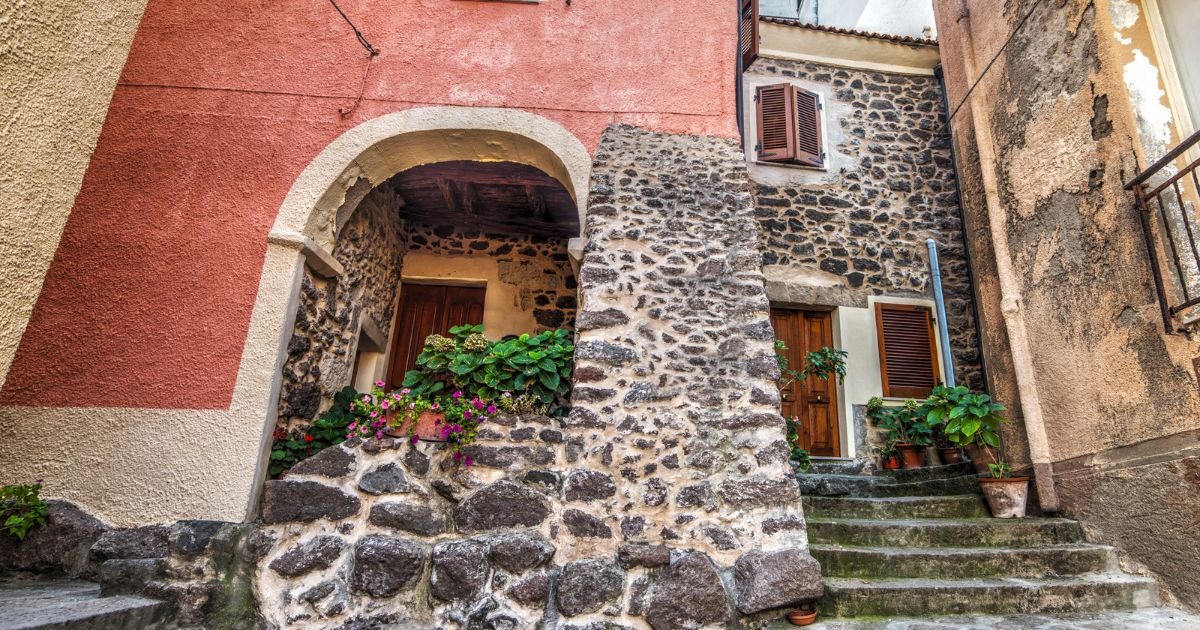
Will the transfer of property between generations reshape home values?
In the coming years, a significant share of Europe’s residential property will pass from one generation to the next. Family homes, apartments, holiday houses: properties acquired over decades will pass to the children and grandchildren of their owners.
But inheriting a house does not necessarily mean wanting to keep it. And when a family decides to sell, it still has to find a buyer willing to pay the price it hopes for.
Who, tomorrow, will buy the houses that heirs no longer want?
The question arises in France, in Italy and in many European countries facing an ageing population, shrinking families and changing ways of life.
In Sardinia, it takes on a particular dimension. The island combines marked demographic decline, a long history of emigration and a vast stock of second homes, often owned by families who live elsewhere in Italy or abroad.
Generational renewal could gradually reshape the supply of property. But not every property will meet the same demand, and not every property will necessarily hold the same value.
These changes raise important questions about property inheritance in Sardinia and its potential impact on the island’s housing market.
The great transfer of Europe’s residential wealth
For decades, bricks and mortar were one of the main ways to build and pass on family wealth in Europe. The post-war generations bought their main homes, built houses and, in some cases, invested in holiday homes, in an economic and demographic context very different from today’s. Their heirs do not necessarily share the same needs. They sometimes live in another region or another country, already own their own home and have a different relationship with the family property.
A house bought forty years ago to bring the children together for the holidays may no longer fit their plans. A residence built for a large family may become too big, too costly to maintain or too far from where they live.
Some of these houses will stay in the family. Others will be renovated, rented out or converted. Some will be put up for sale. The market’s capacity to absorb this additional supply will depend on the territory. In dynamic regions that attract residents and investment, a change of owners can feed an already active market. In those losing population, a larger supply risks meeting limited demand.
Tourist regions present a different situation: their property market also depends on buyers from other regions or from abroad. Sardinia sits precisely where these different dynamics meet. With one further particularity: part of its holiday property stock was built up by non-resident families whose children will, in turn, be tomorrow’s heirs.
Sardinia: fewer residents, a housing stock passing to the next generation
At 31 December 2024, Sardinia had 1,562,381 residents, 8,072 fewer than a year earlier. The average age had reached 49.2. Low birth rates accentuate this trend. According to ISTAT data published in October 2026, the average number of children per woman fell to 0.85 in 2025, down from 0.91 in 2024. Sardinia is the only Italian region where this indicator is below one child per woman. The population is not only shrinking: its composition is changing. Younger generations are smaller and, in many areas, some of them leave the island to study, work or build their lives elsewhere.
This trend also affects the housing stock.
A large share of the houses built or acquired in past decades still belongs to the generations who accompanied the island’s development. They will gradually pass to descendants who do not always live in the same municipality, or even in the same country. This situation is closely linked to the history of Sardinian emigration. Many families who settled in mainland Italy, France, Germany or elsewhere kept a house in their village of origin: a place to return to in summer, to see relatives and to maintain a tangible link with their roots. For the generation that left, this house often retains considerable emotional value. Their children, who spent their holidays there, may wish to keep it. Their own children, raised elsewhere, will not necessarily feel the same attachment.
To this a less visible phenomenon is added.
With ever smaller families, property can become concentrated in the hands of fewer heirs. A single person may become the owner, alone or in joint ownership, of several properties from different branches of the family, sometimes located in different regions or countries. Owning several houses does not mean wanting to keep them all. Maintenance, taxation and remote management can lead owners to consider a sale. Not every inheritance will become a property transaction, however. Some properties will remain in families for a long time, even if little used. Others will only be put on the market several years after being inherited. The effects on the market are therefore likely to be gradual.
Demographics alone do not determine the value of housing. They do, however, influence the number of households likely to occupy or buy it.
A study published by the Bank of Italy in July 2026, examining changes in population and residential prices across Italian municipalities between 2010 and 2025, identifies a significant relationship between the two variables. According to the study, a 10% fall in population is associated, on average, with a decline of around 7% in property prices. This relationship emerges gradually and appears more pronounced in urban areas and economically developed territories. This is not a forecast for Sardinia, still less for each of its localities. But the finding underlines an economic reality: over the long term, residential demand cannot be separated from population trends. Yet in Sardinia, a significant part of the housing stock follows a logic other than that of permanent residence.
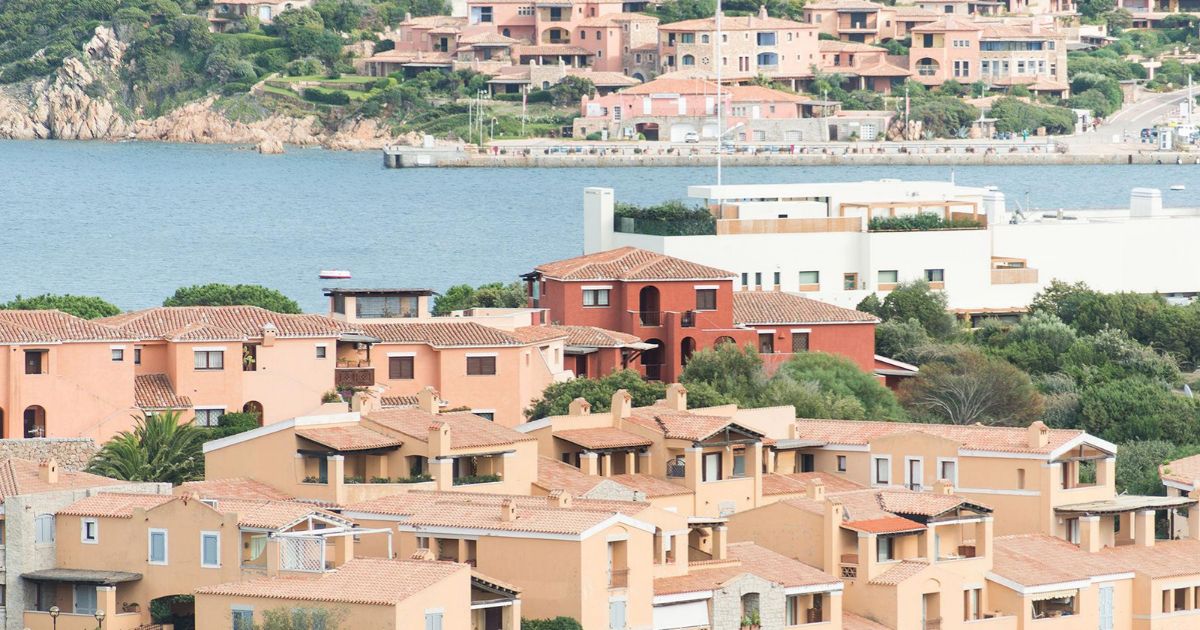
Second homes: the coast’s other property inheritance
When the consequences of Sardinia’s demographic decline are discussed, attention naturally turns to the inland villages, where a shrinking population sometimes weakens services and economic life.
But the island’s housing stock has another particularity: the weight of second homes. Since the 1960s and 1970s, tourism has profoundly transformed several stretches of the coastline. Families from mainland Italy and other European countries bought apartments, houses and villas there for their holidays. Many of these properties have remained in the same families for several decades. Today, this stock too is gradually entering a phase of transmission.
Take a house bought in the 1980s by a couple who spent every summer in Sardinia.
The children have grown up and built their lives elsewhere, sometimes abroad. They have their own families, their own travel habits and different professional constraints. For some, the house will remain a gathering place to which they are deeply attached. For others, it may become a difficult asset to manage, used a few weeks a year but costly to maintain all year round. The decision to keep it will no longer be as obvious as it was for the generation that bought it.
Will the next generation feel the same desire to preserve these family holiday homes?
No data currently make it possible to estimate how many second homes will actually be sold following an inheritance. The census does, however, show the scale of housing not occupied by permanent residents in certain tourist municipalities. According to 2021 ISTAT data, cited by Nomisma in a study for the municipality of Alghero comparing several tourist municipalities in the north of the island, dwellings not occupied by residents accounted for:
72.4% of the housing stock in Palau;
70.8% in Santa Teresa Gallura;
46.5% in La Maddalena.
These figures must be read with care. The statistical category includes empty dwellings, but also those occupied only by non-residents, notably holiday homes. It therefore measures neither the number of abandoned houses nor the number of properties for sale. It does, however, show the scale of the housing stock whose occupancy does not depend on the resident population.
This particularity takes on another dimension when market activity is considered.
According to a Nomisma study on housing demand in Sardinia presented in October 2026, around 80% of the region’s property transactions are concentrated in coastal areas, with Gallura alone accounting for around 21.7% of sales. These figures illustrate the contrast between areas losing residents and coastal destinations where demand remains supported by buyers from outside. But they do not allow us to conclude that every second home will hold its value. The question does not concern only Sardinian heirs who have left the island. It also concerns French, Italian, German and other families who own a second home on the coast. Their children will face the same choices: keep, use, rent or sell. And nothing guarantees that all these properties will easily find a new buyer.
Who will buy the houses heirs do not want to keep?
Passing on property can increase the number of homes for sale. It does not automatically create new buyers. On the Sardinian coast, demand from other Italian regions and from abroad is an important source of support for the market. But this demand is selective. International buyers do not look indiscriminately for any property near the sea. Location, views, accessibility, architectural quality, outdoor space and the condition of the building directly influence their decision. The possibility of enjoying a house outside the summer season can also matter, particularly for those planning to stay several months a year or to prepare their retirement there.
A detached villa in a particularly sought-after location does not appeal to the same buyers as an older apartment with no terrace and in need of major work. Yet these two properties may be in the same municipality, even a few hundred metres apart. Their ability to attract buyers can be very different. Renovation widens this gap. Many homes built several decades ago now need updated systems, improved energy performance, a new layout or substantial work.
Planning, cadastral or landscape constraints can complicate these works and increase their cost. For the buyer, the asking price is therefore only part of the equation. What matters is the total investment needed to obtain a property that meets their expectations. When the purchase price plus works approaches that of an already renovated, better-located house, the comparison becomes decisive.
This is often where a gap appears between how owners and buyers see a property.
Heirs may attach to a house a value linked to its family history, the memories it holds or the prices seen in property listings. The buyer, for their part, compares the available alternatives, future costs and how well the property fits their project. When these two approaches diverge, a sale can take time. Generational renewal could thus widen the differences between the most sought-after properties and those whose features match current expectations less well.
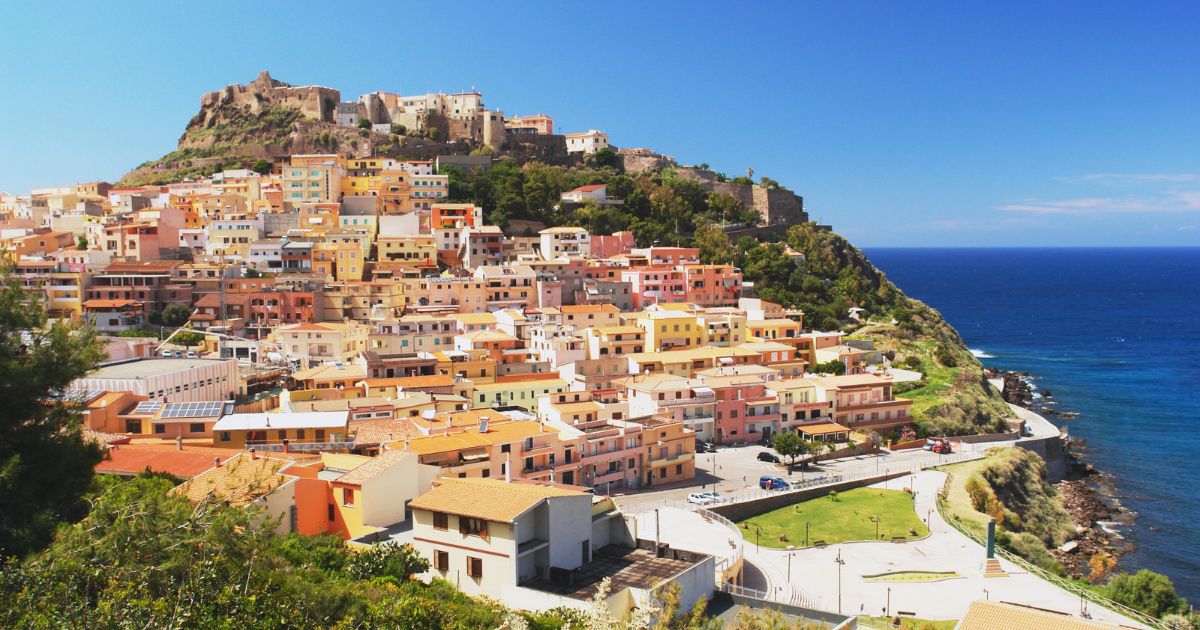
Castelsardo: several property markets in one municipality
Castelsardo, on Sardinia’s north coast, illustrates this diversity well.
The municipality brings together a historic centre of strong architectural character, residential neighbourhoods developed during the twentieth century and coastal areas such as Lu Bagnu, where second homes play a significant role. According to 2021 ISTAT census data, as reported in available municipal statistics, Castelsardo had 5,818 dwellings, of which 2,967 were not occupied by residents, or 51% of the housing stock. Here again, this is neither a rate of abandoned housing nor a measure of the number of properties available for sale. The figure nonetheless highlights the significant share of housing used outside permanent residence. But it would be misleading to treat Castelsardo’s entire housing stock as a single, uniform market.
In the historic centre, the identity of the old town, its traditional houses and the character of its lanes can appeal to buyers looking for an authentic property. Accessibility, parking, layout and renovation costs can, however, weigh on their decision. In the residential neighbourhoods, many houses were designed for large families living there year-round. Their future will depend in particular on local demand, their condition and the cost of any works. In Lu Bagnu, the proximity of the beaches draws demand more closely tied to second homes, sometimes from several countries. Here too, the exact location, the view and the outdoor space make the difference. These properties belong to the same municipality, but they do not necessarily answer to the same market.
The generational transition may affect all these categories of property without producing the same effects. The example of Castelsardo shows why a locality’s reputation as a destination is not enough to guarantee the future value of each of its properties.
The asking price does not tell the whole story of a property’s value
In discussions of property, attention often focuses on price trends. We watch rises, falls or stability in average values, as if these indicators were enough to describe the state of a market.
Yet there is another essential dimension: liquidity.
Liquidity refers to a property’s ability to find a buyer within a reasonable time and at a price that reflects actual market conditions. Two properties may have comparable valuations and follow very different paths to sale. The first quickly attracts several buyers. The second stays on the market for months, even years, without finding a taker. This difference is not necessarily reflected in asking prices. An owner who must sell quickly may accept a substantial negotiation. Conversely, a family that has inherited a house, with no mortgage to repay and no immediate need for cash, may decide to wait a long time rather than revise its price.
An inherited property can thus remain on the market for several years without its asking price falling noticeably.
Stable listings therefore do not necessarily mean that supply and demand are in balance. They may conceal a persistent gap between sellers’ expectations and what buyers are actually willing to pay. To understand how a market is evolving, one must distinguish between asking prices, agreed sale prices and time on the market.
Averages can also give an incomplete picture.
If transactions mainly involve the best-located and most sought-after properties, the average sale price can remain high even as less competitive homes face greater difficulty. This is known as a composition effect: the average also reflects the characteristics of the properties actually sold.
Generational renewal could accentuate these differences.
If more inherited properties gradually come onto the market, buyers will have new points of comparison. Properties with rare qualities will retain an advantage. Others will have to stand out through their price, their renovation potential or their terms of sale. This is not to predict a general fall in property prices in Sardinia. It is to recognise that the ability to find a buyer could become as important a criterion as a property’s theoretical price.
Buying today, with the next generations in mind
For those considering buying a house in Sardinia, these changes do not necessarily represent a risk. They can also create opportunities.
The generational transition can bring back to the market properties held for decades within the same families, and encourage the renovation of a sometimes under-used housing stock. Buying property remains a long-term financial decision. Buying a home in Sardinia often answers personal motivations: the wish to spend more time on the island, to reconnect with one’s origins, to prepare for retirement or to create a place to bring the family together. These motivations are part of a property’s use value.
Emotional value and market value do not always coincide, however.
A house can bring many years of satisfaction and still prove harder to resell than expected. This is why analysing a purchase should also take into account the features that will allow the property to remain attractive. Location, build quality, accessibility, running costs, planning and cadastral compliance, and the possibility of using the home all year round are all important factors.
The total cost of the operation deserves particular attention when the house needs work.
Buying an inherited property, especially one owned by several heirs, may also require additional checks: title deeds, the status of the succession, the agreement of all sellers and the building’s compliance. No one can predict with certainty what buyers will be looking for in twenty years. It is nonetheless possible to distinguish qualities that are hard to reproduce — a privileged location, a remarkable view, good accessibility — from features that may become obsolete or require significant investment.
One final consideration brings us back to where we started.
Whoever buys a house in Sardinia today to keep for a long time may, tomorrow, be the one passing it on to their children. And they may have other plans. A property that keeps good options for use, transformation or resale therefore offers more than a possible capital gain. It leaves the next generations free to choose.
What heritage will we leave to future generations?
Sardinia is about to undergo a transformation that concerns not only who owns its houses, but also how they are used and their place within the territory. The passing of property between generations may encourage the renovation of buildings, the arrival of new owners and the return to use of a sometimes idle housing stock.
It may also expose the difficulties of properties that do not meet sufficient demand, particularly in areas where the population is declining and economic prospects are more limited. Not every house will share the same future. Some will remain in families. Others will find new owners and new uses. Others still risk remaining without any real project for a long time. Sardinia’s appeal to Italian and international buyers is a major asset. But it cannot replace local demand everywhere, nor guarantee the value of every property.
What European families are experiencing today with their parents’ house, Sardinia could experience on a particularly large scale, given its demographics and the weight of its second homes. Families will decide whether to keep or to sell. Buyers will choose the properties suited to their projects. And territories will have to offer a new future to a heritage built up over decades.
Because a house can be inherited, but its market value is not automatically passed on with it.
Your project in Sardinia, with a long-term perspective
Choosing a house in Sardinia means finding a place that feels like yours, while understanding what will preserve its appeal over time.
Since 2012, I have advised buyers exclusively through this reflection, and then through the search for and acquisition of their property. Personal knowledge of the territory, independent analysis and the coordination of the right professionals give each decision solid foundations.
Sources
ISTAT — Censimento della popolazione: dati regionali, anno 2024
ISTAT — Natalità e fecondità della popolazione residente, anno 2025
Banque d’Italie — Demografia e prezzi delle abitazioni residenziali
ISTAT — Censimento permanente 2021: caratteristiche delle abitazioni
Nomisma — Patrimonio residenziale e nuovi fabbisogni abitativi e turistici nella città di Alghero
L’Unione Sarda — Case, in Sardegna il 30% non è abitato stabilmente. Boom degli affitti brevi