
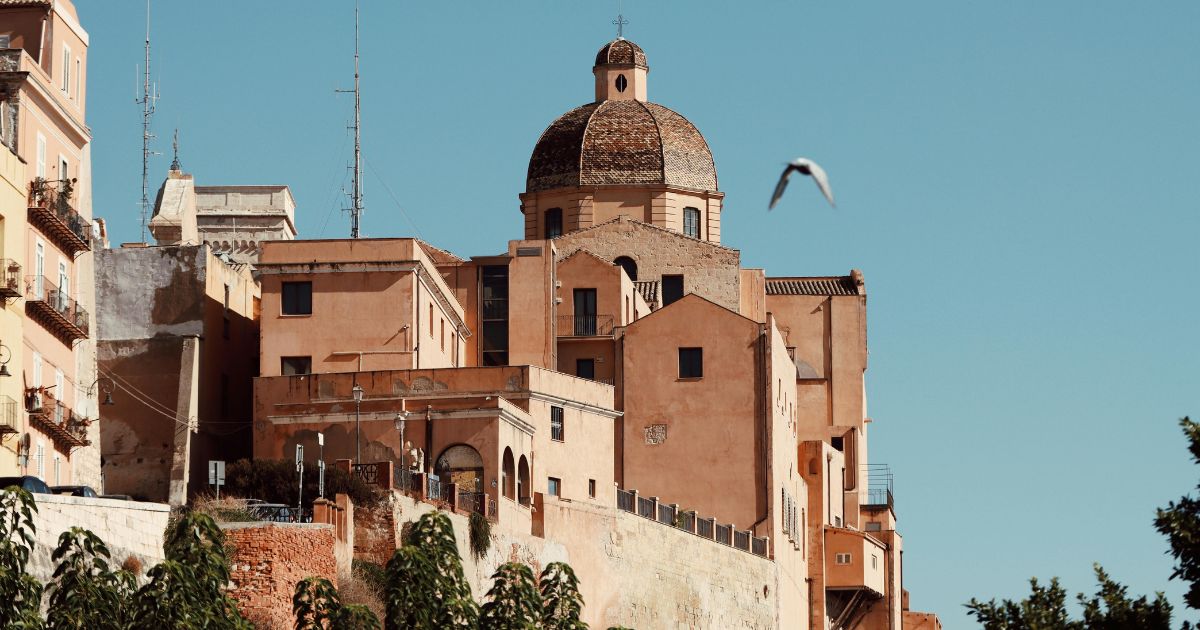
Elective Residence Visa in Italy Living in Sardinia on a Long-Term Basis
Moving to Sardinia is never a simple change of address.
It is often the culmination of a long, sometimes silent reflection, shaped by the desire to slow down and to reconnect with a more authentic relationship to time, place, and human connection.
For many of our international clients, this reflection begins with a simple yet essential question:
“Do I truly have the right to live in Italy, over the long term?”
This question is neither administrative nor abstract.
It speaks directly to the legitimacy of the project, its sustainability, and the real possibility of settling in a country governed by well-defined rules, rhythms, and traditions.
This is precisely where the visa becomes central.
At ResRei Sardinia, we rarely meet “urgent” buyers.
We mainly work with individuals who wish to anchor themselves, to understand before acting, and to build a coherent project — legally, humanly, and patrimonially.
From this perspective, the elective residence visa is not a mere administrative formality.
It represents the invisible foundation upon which any sustainable life project in Italy must rest.
The Elective Residence Visa: Living in Italy Without Working
The elective residence visa exists precisely to frame this type of life project.
It is a national long-stay visa (Type D), intended for non-EU nationals who wish to live in Italy on a long-term basis without engaging in any professional activity within the country.
It allows legal residence provided that the applicant can demonstrate sufficient and stable financial independence over time.
Profiles Generally Eligible
This visa is designed for clearly defined profiles, for whom local employment is not an economic necessity:
retirees or individuals in pre-retirement
investors with stable passive income
families living on annuities, dividends, or rental income
individuals wishing to reside in Italy without relying on the local labor market
In all cases, the underlying principle remains the same: living in Italy autonomously, without creating economic dependence on the local system.
Situations Incompatible with Elective Residence
Conversely, the elective residence visa is not suitable for certain situations, often misunderstood:
freelancers wishing to work remotely from Italy
entrepreneurs in the process of starting a business
individuals dependent on active salaried income
In such cases, other legal frameworks must be considered.
The elective residence visa is based on a clear and non-negotiable principle:
the absence of any professional activity in Italy.
What Italy Specifically Requires
Behind this visa lies a fundamental requirement: to demonstrate the ability to live in Italy autonomously, without relying on the local economic system.
Italian authorities typically require:
autonomous, passive, stable, and regular income
(approximately €31,000 per year for a single person, €38,000 for a couple, indicative figures)proof of stable accommodation in Italy (registered lease or property ownership)
international health insurance with minimum coverage of €30,000
a formal commitment not to work in Italy
These elements are non-negotiable.
They structure the project from its very inception and condition its long-term viability.
Visa Duration and Residence Permit
Elective residence is built over time, through clearly defined steps that must be respected from the moment of arrival in Italy.
The elective residence visa is generally issued for an initial period of one year.
Upon arrival in Italy, the visa holder must apply for a residence permit for elective residence within eight days.
This step marks the transition from an administrative project to actual residence.
The permit is then renewable annually, provided that the conditions which justified its issuance remain in place. Income, housing, health insurance, and effective presence in Italy are carefully reassessed at each renewal.
Over time, and with continued compliance, this legal residence may open the path to permanent residence, further strengthening the stability of the life project.
Housing: Far More Than an Administrative Requirement
No elective residence visa is granted without concrete proof of housing in Italy.
However, this requirement goes far beyond administrative compliance.
It reflects the way one chooses to live, to belong to a territory, and to build a genuine daily life.
In Sardinia, one does not reside as one simply stays.
Certain areas, although stunning, are designed for seasonal use and empty out outside the tourist period.
Others, more discreet, offer year-round local life, accessible services, and lasting human relationships.
This is precisely where the role of ResRei Sardinia begins.
Helping our clients identify locations that are genuinely livable year-round, compatible with resident status and coherent with their life project, is an integral part of our work.
It is not merely about finding a property, but about understanding a territory — its rhythms, constraints, and balances.
Real Estate and Residence: Thinking Before Buying
Purchasing a property without first clarifying one’s residency framework can weaken an otherwise sincere project.
Conversely, when the life project, residency status, and property choice move in the same direction, real estate becomes an anchor — never a constraint.
We firmly believe that:
A successful real estate project is one that is legally coherent, thoughtfully considered from a human perspective, and designed for the long term.
Sardinia: A Choice That Must Be Earned
Sardinia is not a standard destination.
It requires time, attentiveness, and genuine respect for its rhythms, rules, and traditions.
In return, for those who commit with patience and discernment, it offers something rare:
an authentic, sustainable, and deeply human quality of life.
At ResRei Sardinia, we do not sell properties.
We guide life decisions.
If your project to settle in Sardinia is still in its reflection phase, it is often the right moment to begin a conversation.
Every project begins with an honest discussion — without urgency and without obligation.
FAQ – Elective Residence Visa
What is the elective residence visa in Italy?
It is a national long-stay visa (Type D) allowing non-EU nationals to reside in Italy on a long-term basis without engaging in professional activity, provided they have sufficient and stable passive income.
Can one work in Italy with an elective residence visa?
No. This visa strictly prohibits any professional activity in Italy, whether salaried, self-employed, or carried out remotely for Italian client
What types of income are accepted?
Only passive and regular income is accepted: pensions, annuities, dividends, rental income, or financial investments. Income derived from active work is not eligible.
What level of income is generally required?
Indicatively, around €31,000 per year for a single person and €38,000 for a couple. These amounts may vary depending on the competent consulate and personal circumstances.
Is it necessary to buy property to obtain the visa?
No. A registered lease agreement is sufficient. However, proof of stable housing in Italy is mandatory.
Can the elective residence visa lead to permanent residence?
Yes. After several years of continuous legal residence and subject to ongoing compliance, it is possible to apply for permanent resident status.
Why is the choice of location crucial in Sardinia?
Some areas are designed for seasonal tourism and are not viable year-round. Sustainable settlement requires services, active local life, and coherence with permanent residency.
When should real estate be considered in an elective residence project?
Ideally from the outset. Residency status, legal framework, and property choice should evolve together to avoid incoherent or fragile decisions over the long term.