
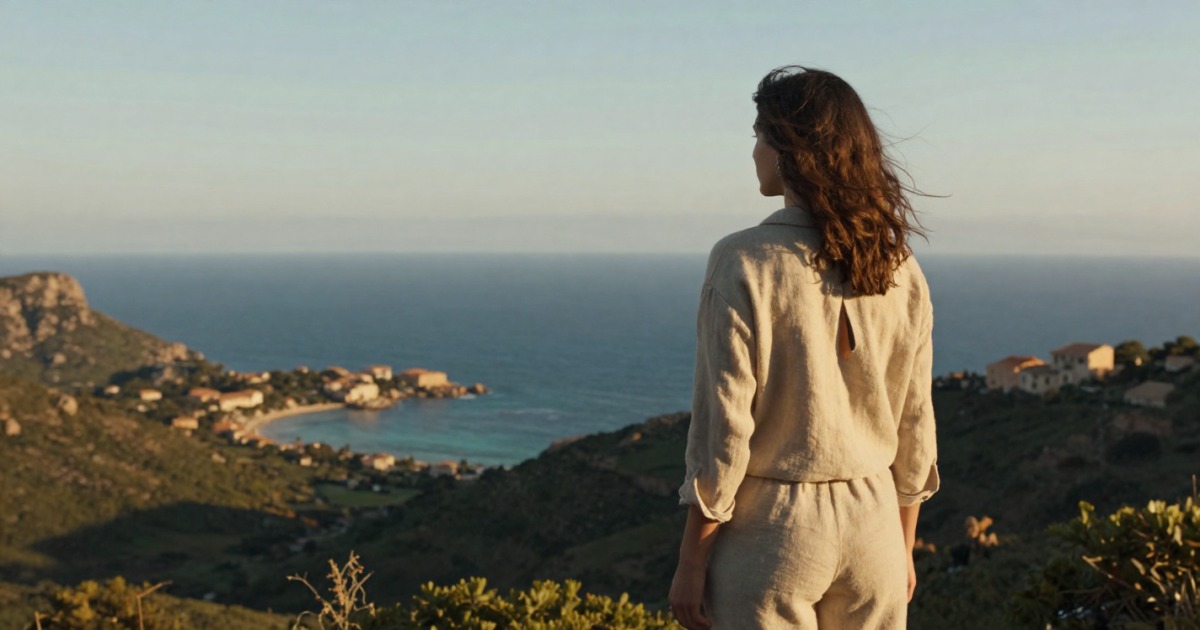
Distance, information, professionals, local market: why international buyers often face greater uncertainty when purchasing property in Sardinia.
Sardinia is easy to fall in love with. Many people discover the island, return several times, and eventually begin to imagine owning a property there. That comes as no surprise when you consider what Sardinia has to offer: an exceptional climate, preserved landscapes, a more relaxed pace of life, and an environmental quality that has become increasingly rare across much of Europe.
As a native of Sardinia, I understand very well why so many buyers are drawn to the island. I also understand what it feels like to want to turn that attachment into something concrete.
Most international buyers arrive with a relatively clear idea of their project. They have often identified a region, a budget, and sometimes even the type of property they are looking for.
And yet, difficulties tend to emerge surprisingly early — and they usually have very little to do with the property itself.
A misunderstanding of the local market, cultural differences, the Italian purchasing process, the number of professionals involved, or simply the challenge of distance: all of these can make a project harder to navigate. Some situations lead to months of delay; others have significant financial consequences. Not to mention the stress of constantly wondering whether something important has been overlooked along the way.
This often comes as a surprise. Many of the buyers concerned are experienced professionals, accustomed to making important decisions and managing complex projects.
Yet buying property abroad creates a particular situation: even highly capable people can suddenly find themselves in a context where they do not fully understand the rules, the customs, or the local practices. It is often from this gap that uncertainty arises.
Information Asymmetry: Buyers Rarely Play on Home Ground
International buyers rarely arrive without information. Most have already done extensive research, browsed listings, read articles, and sometimes spoken with professionals. But this information is often fragmented, difficult to contextualise, and not always easy to apply at the right moment. Knowing that a region is “popular” or that a price appears to be “within market range” does not say much about whether that price is actually justified.
This is often where uncertainty begins. Information exists, but without local points of comparison it can be hard to interpret. A price may seem high when it is perfectly consistent with the local market. Conversely, what looks like an attractive opportunity may conceal issues that local participants already understand.
There is nothing unusual about this situation — it exists in most international property markets. But it has real practical consequences. Every trip to Sardinia requires time, organisation, and often a significant financial commitment. While a local buyer can revisit a property or meet a professional within days, an international buyer frequently has to make decisions with less visibility — and therefore rely on information they cannot always verify independently.
Access to the Market Is More Fragmented Than Many Buyers Expect
Many buyers assume that a thorough online search will give them a complete picture of the market. In Sardinia, the reality is more nuanced.
Unlike some Anglo-Saxon countries, Italy does not have a centralised system that gathers all available listings in one place. The same property may be marketed simultaneously by several agencies, while others circulate much more discreetly through professional or local networks. Property portals are a good starting point — but rarely a complete picture of the market.
One Island, Many Different Destinations
From abroad, Sardinia can appear relatively homogeneous. In reality, the island is made up of a multitude of micro-markets where just a few kilometres can dramatically change the environment, accessibility, buyer profile, and price levels.
Costa Smeralda, Alghero, Santa Teresa Gallura, Castelsardo, Orosei, and Ogliastra all operate according to very different economic, residential, and tourism dynamics. Understanding these differences often requires much more than browsing available listings.
Two properties listed at the same price can serve entirely different purposes depending on their location. A property can never be fully separated from the territory it belongs to.
Language Is About More Than Translation
Translation tools — and today, artificial intelligence — make it possible to understand documents quickly. This is useful, and many buyers naturally rely on them. But a property transaction involves far more than translating words.
Understanding a situation also means reading context, local practices, and what is left unsaid — sometimes even the hesitations of the people involved. A clause in a preliminary contract, a remark from a surveyor, an evasive response from a seller: no tool can replace the ability to understand what is actually happening in a negotiation.
The Professionals Involved — and Roles That Are Not Always Clear
In an international property purchase, several professionals may be involved: estate agents, notaries, surveyors, architects, lawyers, tax advisers, and property consultants — each with their own scope and responsibilities. For foreign buyers, it is not always easy to understand who does what, when they become involved, and whose interests they are protecting. This confusion is often the source of unrealistic expectations or important checks being carried out too late.
Conclusion
At the beginning, a property project in Sardinia often feels relatively straightforward. A region stands out. A budget is defined. A few properties catch the eye.
Then the project becomes real.
Technical questions emerge. Due diligence begins. More professionals become involved.
This is usually the moment when buyers realise they are no longer simply choosing a house.
They are acquiring a real estate asset in a foreign country.
The uncertainties experienced by international buyers in Sardinia are not a sign that the market is unusually complex or risky — or no more so than in many other countries. They are simply a natural consequence of making an important purchase from a distance, in an environment that differs from the one you know.
The more a buyer understands the market, the rules, and the professionals involved, the more confidence becomes grounded in knowledge rather than assumption — and this is often when the most considered decisions are made.
Buying property in Sardinia should ultimately remain what it was from the very beginning: a life project.